Track the brands gaining momentum, understand what consumers truly value and identify growth opportunities across more than 23,000 emerging restaurant concepts.


Delivery’s Reckoning: The FTC, Fee Fatigue and the $20 Billion Question
The FTC and city regulators are taking apart the hidden-fee model just as guests rethink how often they order through the apps. Our new member report looks at what’s coming in 2027, which brands are most exposed, and five moves operators should make now.

Savor AI 50: Meet the 10 Finalists for Best Brand AI
Every restaurant chain says it's "doing AI." Ten are actually running it at scale. Savor AI 50 research tracked 77 restaurant brands with sourced AI deployments, and 39 of them use AI to take drive-thru or phone orders. But the brands that made the Best Brand AI finalist list didn't stop at the speaker post. They put AI in the headset, the kitchen, the hiring funnel, the kiosk and the reservation line. Meet the 10 finalists for Best Brand AI in the Savor AI 50: The 2026 Restaurant AI Awards. Winners are revealed Dec. 1.
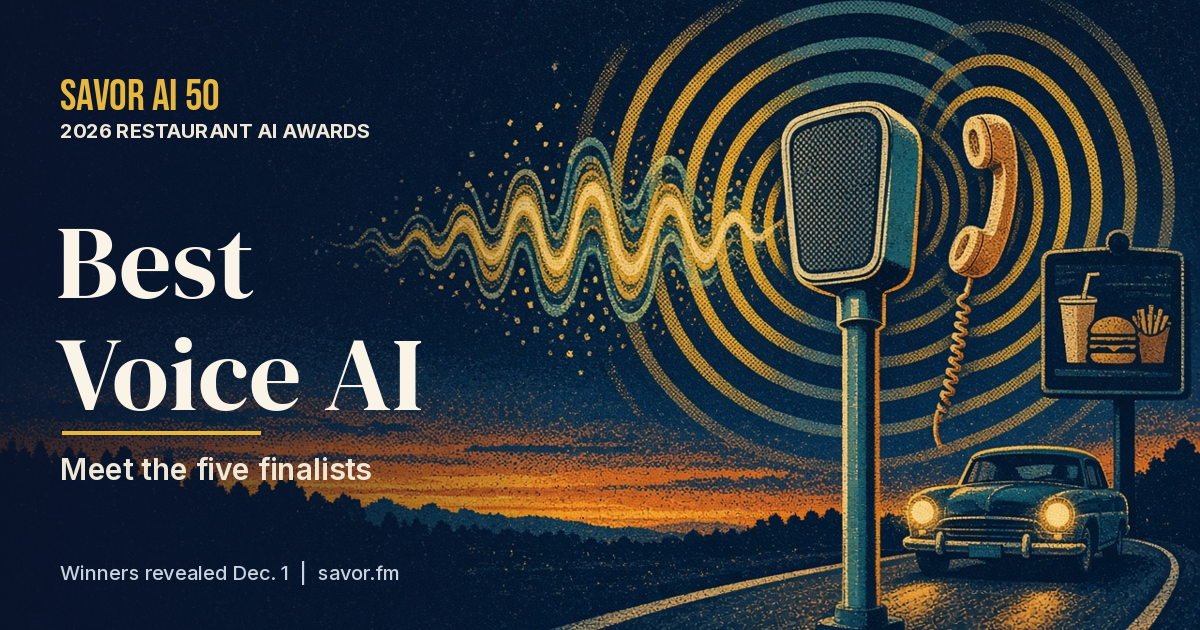
Savor AI 50: Meet the 5 Finalists for Best Voice AI
Voice AI is the most common way restaurants are putting AI to work, and 2026 is the year it moved from the pilot lane to the whole system. Savor AI 50 research found 39 of 77 tracked restaurant brands using AI to take drive-thru or phone orders. The five Best Voice AI finalists are the companies doing that work across thousands of speaker posts and phone lines, from Taco Bell's drive-thrus to Casey's pizza calls. Meet the finalists for Best Voice AI in the Savor AI 50: The 2026 Restaurant AI Awards. Winners are revealed Dec. 1.

McDonald’s Loses Its Crown. The QSR Top 10 Just Rewrote Itself Around Traffic.
Traffic is the only number that matters now. McDonald’s lost guests, Wendy’s lost more, and Starbucks and Burger King proved you can win visits without winning the price war.
The Better-for-You Top 5: Who’s Actually Winning Healthy Fast Casual in 2026
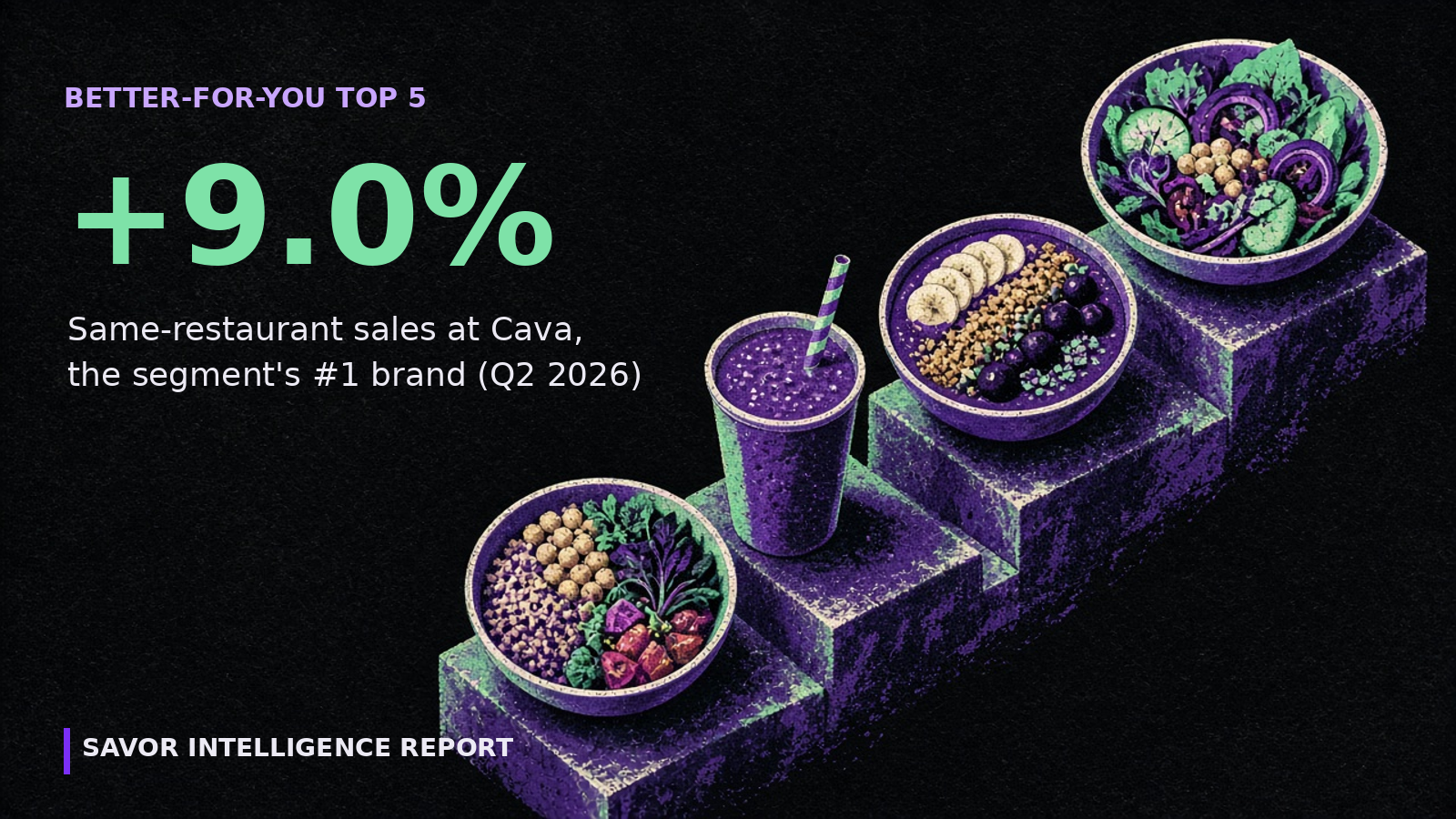
Savor Intelligence ranks the top 5 better-for-you restaurant brands of 2026: Cava, Tropical Smoothie, Smoothie King, Playa Bowls, Sweetgreen, and why.

Is Fast Casual Becoming QSR?
Is fast casual becoming QSR? This fall the evidence says the kitchen is. Raising Cane’s is opening 12 restaurants in one month on a single focused menu, Dillas Quesadillas cut its lineup and said it would “lean hard into QSR+,” and Chipotle is winning traffic back with faster equipment and drive-up lanes. But speed has a price, and fast casual could lose the quality, premium and hospitality that made it. Members get the full answer, what operators should copy and what they should protect, plus this week’s Savor Brand Price Watch.
Third Party Cooked?
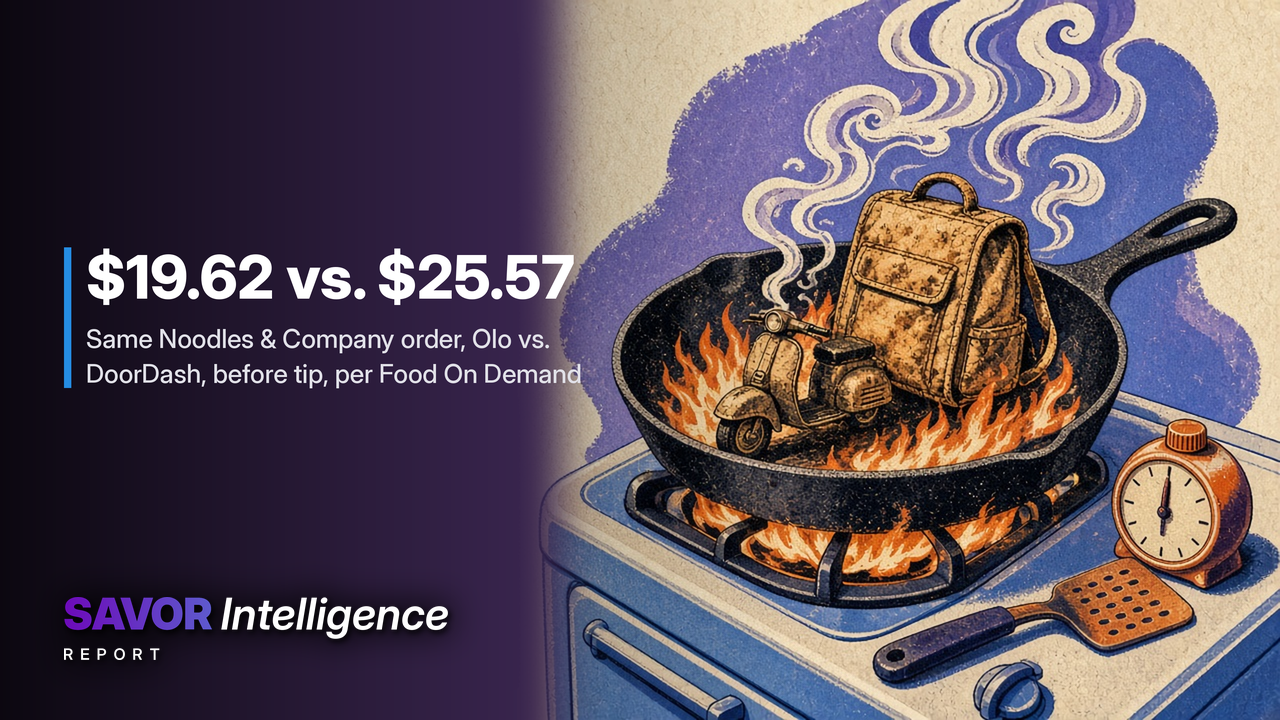
Google just handed restaurants a switch to turn off DoorDash and Uber Eats links on their own Business Profiles. That lands in the same week Olo's new marketplace showed that cheaper menu prices don't always mean a cheaper order, DoorDash admitted AI agents have sent it only "several hundred" orders, and Applebee's app exposed rewards members' personal data. The fight over who owns the guest has moved to the order button, the loyalty login and the data behind both. Members get the full breakdown of what operators should switch on, switch off and lock down, plus this week's Savor Brand Price Watch.

Same Guest, Opposite Years
Cava and Sweetgreen sell to the same guest: young, urban, health-minded and digital. This year they're living in different worlds. Cava grew same-restaurant sales 9% last quarter on 5.3% traffic growth and is opening a restaurant roughly every five days. Sweetgreen's comps fell 6.2%, it now expects to lose money on an adjusted EBITDA basis this year, and it's rebuilding around cheaper wraps and faster lines. The gap has little to do with salads versus Mediterranean. It comes down to value, pricing discipline and execution. Members get the full breakdown ahead of Cava's Nov. 4 report, plus this week's Savor Brand Price Watch.

The Loyalty Land Grab
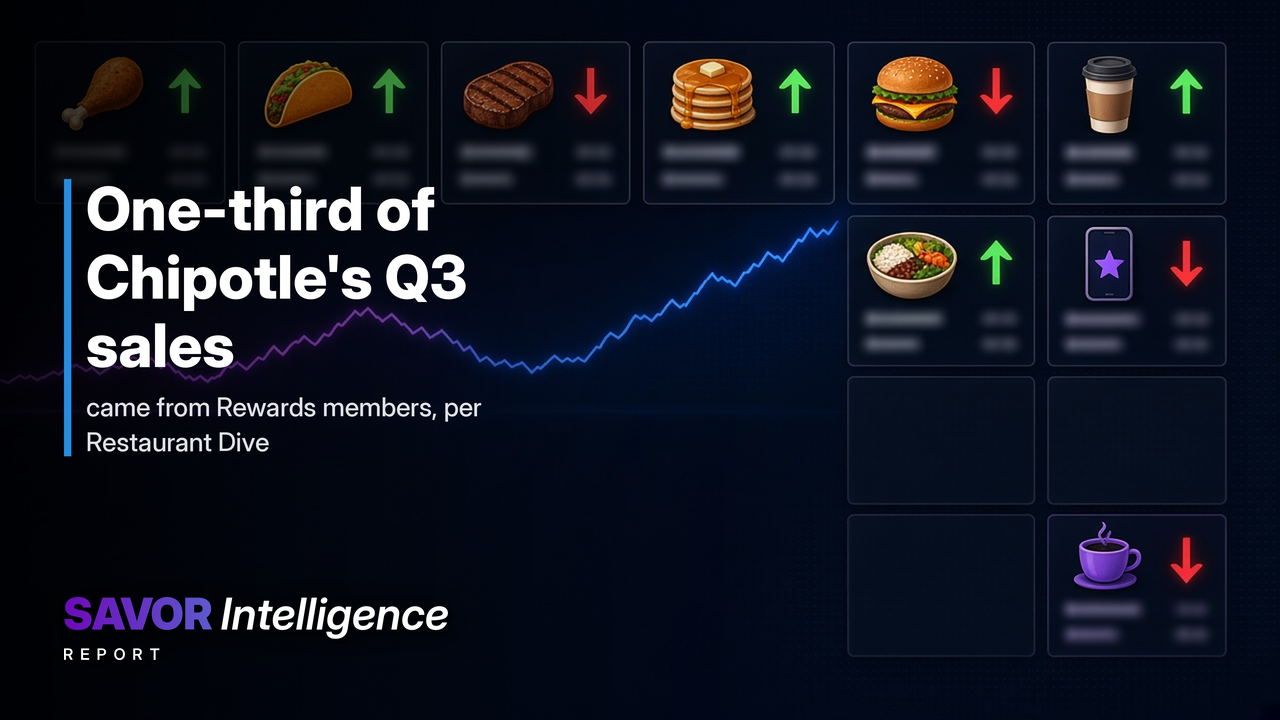
The restaurant business is getting new owners at every layer. DoorDash is buying Instacart for about $17 billion, Trian and Wendy's biggest franchisee want to take Wendy's private, and Chipotle now runs a third of its sales through loyalty. The message for operators is the same at every level: whoever holds the guest relationship sets the terms. The marketplaces are consolidating, and the brands growing traffic are the ones pulling guests into their own app, their own rewards and their own marketing voice. Members get the full playbook and this week's Savor Brand Price Watch.
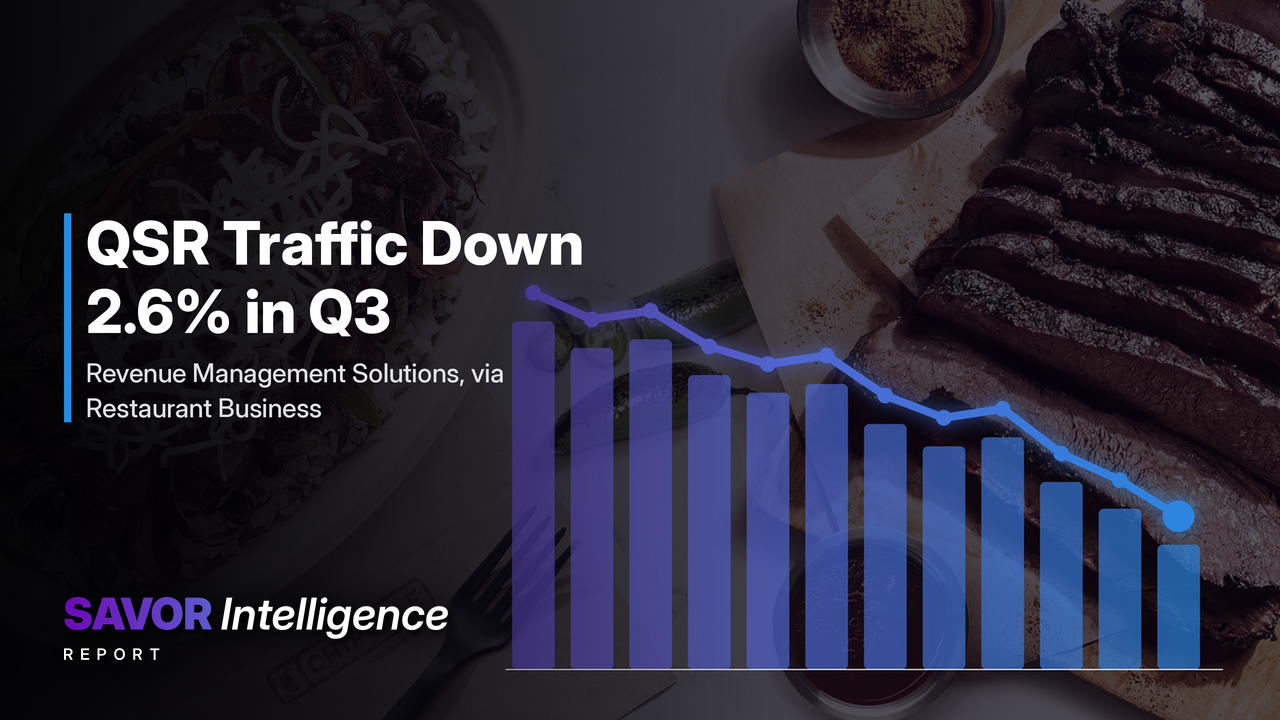
The Visit Recession
Restaurants aren't losing customers so much as losing visits. Quick service traffic fell 2.6% last quarter, lower-income households are cutting fast casual, coffee and breakfast runs, and Wingstop just guided to a 6.5% to 7% same-store sales decline for the year. Yet Chipotle, Chili's and Cheesecake Factory grew traffic by giving guests a sharper reason to come. The split isn't about price alone; it's about who your guest is and how clearly you sell value. Members get the full segment breakdown and this week's Savor Brand Price Watch.
AI Leaves the Pilot Lane
Restaurant AI just crossed from pilot to standard. Taco Bell runs voice AI in more than 890 U.S. drive-thrus, Bojangles is taking its AI lane to every unit, and Burger King plans an AI assistant in all U.S. restaurants by year-end. The bigger shift is quieter: AI is moving off the speaker and into hiring, prep, cross-sells and invoices, where the payback is easier to prove. Kitchen robots, meanwhile, are still mostly tests. Read the full operator playbook and this week's Savor AI Signal Watch, ahead of the Savor AI 50 winners on Dec. 1.
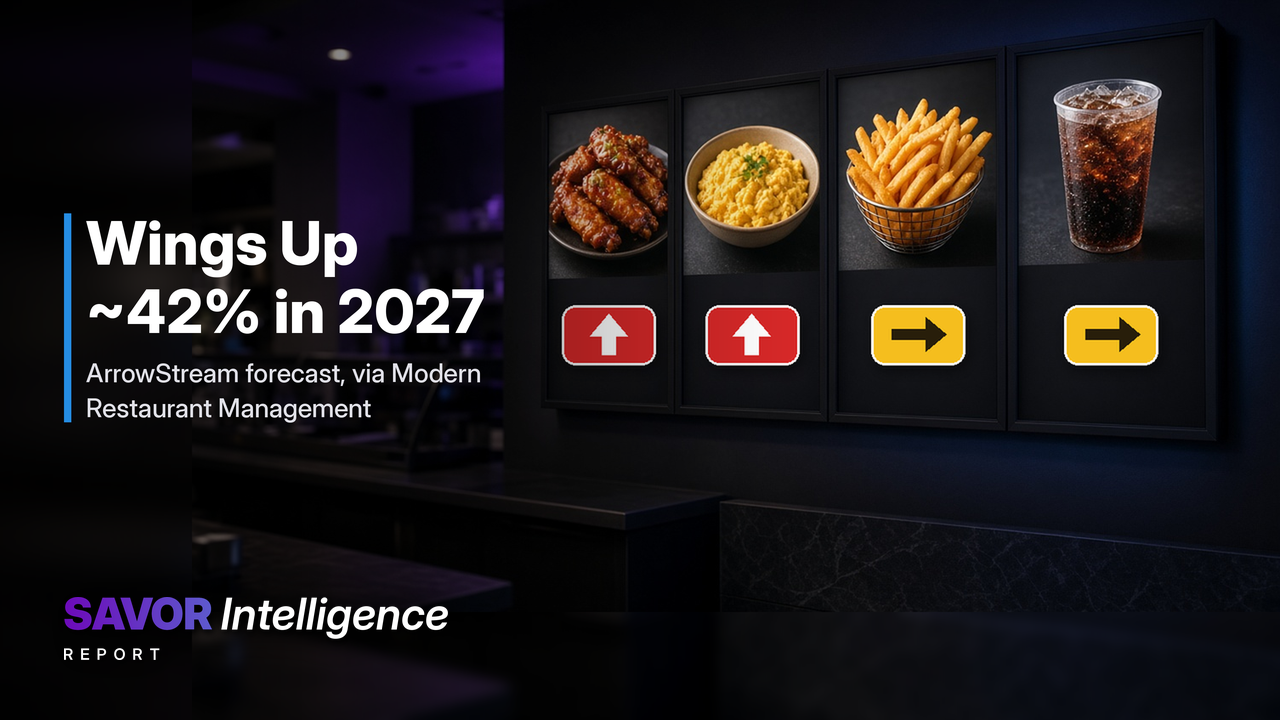
The Cheap Chicken Era Ends in 2027
Wings and eggs are set to lead next year's food inflation, Washington is taking aim at unauthorized delivery listings, and AI is finally doing the paperwork. Here's how operators protect margin before January pricing.
The cheap-chicken era has an end date. ArrowStream now expects the items that got cheaper in 2026 to lead food inflation in 2027, with wings up about 42% and liquid eggs up about 45%. At the same time, Congress has a bipartisan bill that would stop delivery apps from listing restaurants without permission, and AI tools are starting to do back-office work like invoices, purchasing and prep instead of just reporting on it. The operators who win next year will lock in costs now and steer guests to channels they control. Members get the full playbook, plus this week's Savor Brand Price Watch.

Rent the Courier, Own the Guest
One company may soon control most of the money Americans spend on restaurant and grocery delivery. DoorDash is in advanced talks to buy Instacart for about $17 billion, and a deal could land as soon as Wednesday. Meanwhile, McDonald's, Chipotle and Fogo de Chão are all launching November value plays within days of each other, beef supply is getting tighter, and Sweetgreen just set a new pay benchmark for general managers. The lesson for operators: use the delivery companies' couriers, but keep the customer relationship for yourself. Members get the full breakdown.


Who Holds the Pen on Price?
Who sets your menu price? This week the answer split three ways. A second lawsuit over McDonald's AI-assisted pricing now names Deloitte, while a three-unit franchisee says ChatGPT cut his repricing work from five days to two hours. Walmart is delivering Subway at in-store prices, Pizza Hut's new filing shows 275 U.S. franchised closures this year, and tariffs are pushing some imported cheese past $60 a pound. The lesson: pricing power now belongs to whoever owns the data and the channel. Members get the full breakdown.
Convenience Is the New Discount
Guests aren't just spending less. They're showing up less, and the reason surprised us: in William Blair's latest survey, "inconvenient" beat "too expensive." That changes the playbook. Fast food's discount war is winding down in favor of better food, bankrupt operators are turning into bargain deal flow, and Olo's new app, systemwide drive-thru voice AI and loyalty programs are all fighting over the same thing: who owns the guest's next order. Members get the full breakdown.