Inside Gen Z's Beverage Boom and the Push to Modernize Restaurant Pay
On the latest episode of Fast Casual Nation, host Cherryh Cansler dug into two forces reshaping how restaurants attract both customers and employees: the explosive rise of custom, non-alcoholic beverages and the growing demand for faster access to earned wages. The episode opened with Kelly O’Rourke, Director of Marketing at FiiZ Drinks, the Utah-born dirty soda chain that has grown to roughly 75 open locations, about half of them still in its home state, with another 200 units sold and awaiting opening, the vast majority outside Utah. That expansion push includes new stores in Texas and Oklahoma, a planned move into the Southeast, and FiiZ’s first-ever California location before year’s end. O’Rourke credited Gen Z’s embrace of non-alcoholic drinking culture, paired with social platforms like TikTok and Instagram, for turning what was once a regional novelty into a fast-growing national category.
O’Rourke pushed back on the idea that dirty soda is a passing fad, arguing that beverage brands can keep evolving in ways single-product concepts can’t. FiiZ, she said, isn’t just soda: the menu spans custom waters, lemonades, energy drinks and frozen beverages, positioning the brand for guests who want customization without the sugar-heavy soda base. She was notably upbeat about rising competition from both dedicated rivals like Swig and national chains such as Sonic and Taco Bell wading into the category, framing it as validation that dirty soda has real staying power rather than a threat. On differentiation, O’Rourke pointed to FiiZ’s lobby-driven, community-focused store model as a contrast to more drive-through-centric competitors, along with a broader snack lineup, including pretzel bites and “FiiZ Puffs,” that she expects to keep expanding in 2027.
Looking ahead, O’Rourke previewed a limited-time partnership with candy brand Hi-Chew, built around summer-inspired frozen drinks, and confirmed energy drinks are a major 2027 priority, with the brand leaning toward developing its own private-label line rather than continuing to lean on outside brands. She also discussed FiiZ’s new partnership with agency Proof, brought on to help a lean 15-person corporate team scale its marketing and social strategy as the brand prepares for accelerated national growth. Throughout, O’Rourke tied FiiZ’s opportunity back to value-conscious, health-aware Gen Z consumers who want an experience, not just the cheapest soda on the block, even as the brand leans into value pricing and combo deals amid tighter consumer spending.
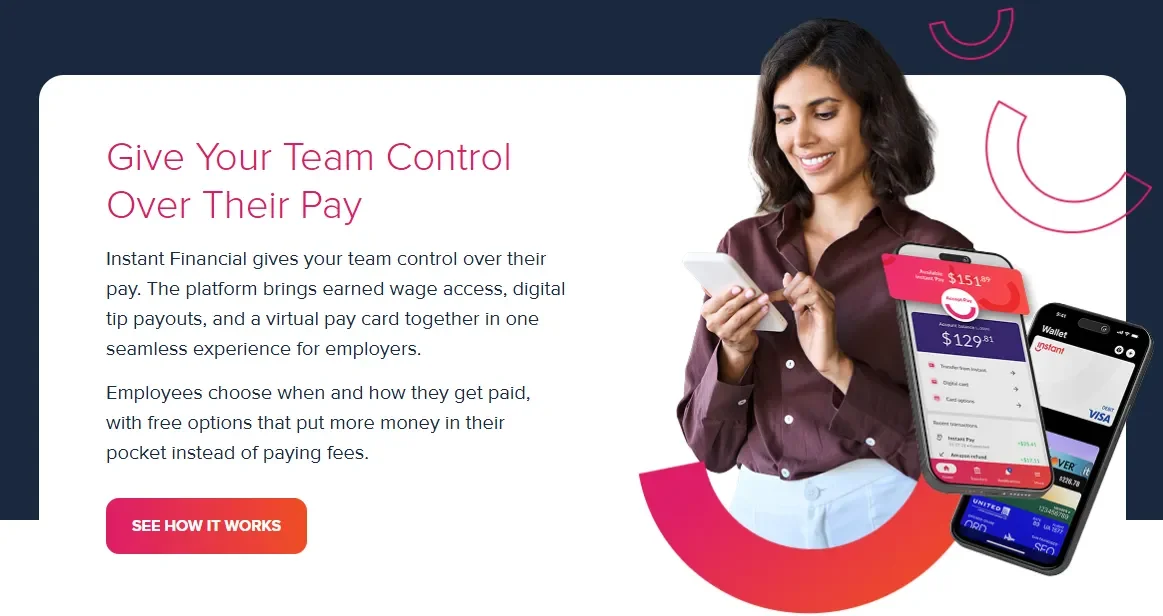
The conversation then shifted to the workforce side of the restaurant business with Tal Clark, CEO of Instant, a fintech platform providing earned wage access, tip payouts and virtual paycards to nearly 200,000 restaurant employees across roughly 600 clients, including Bloomin’ Brands, Lazy Dog and an in-progress rollout with Buffalo Wild Wings and Inspire Brands. Clark walked through findings from Instant’s newly released 2026 State of Hourly Restaurant Workers Study, conducted with the Center for Generational Kinetics: 75% of hourly restaurant workers live paycheck to paycheck, a figure that climbs to 83% once managers are excluded, and 61% reported skipping meals to make ends meet.
Clark explained how Instant’s platform works in practice, letting employees access roughly half of their gross earned wages, about 75 to 80% of net pay, on a daily basis after clocking out, with no cost to the employer. He noted workers tap into the option about four times a week on average, using it for essentials like gas and groceries rather than discretionary spending. On the tipped side, Instant’s tip-pooling software integrates directly with point-of-sale systems to automate payouts, eliminating the need for restaurants to keep cash on hand for tipped staff. Clark said earned wage access is quickly becoming a baseline expectation rather than a perk, citing survey data showing 81% of workers believe on-demand pay should be a standard benefit, a shift he sees accelerating retention pressure across an already tight restaurant labor market.
Together, the two conversations underscored a common thread for restaurant operators: Gen Z and millennial consumers, and increasingly Gen Z employees, are driving demand for personalization, speed and financial flexibility in equal measure. Whether it’s a build-your-own dirty soda or same-day access to tips already earned, both guests pointed to the same underlying shift, a workforce and customer base that expects businesses to meet them on their own terms, in real time. For restaurant leaders, the episode offered a reminder that innovation isn’t confined to the menu; it extends just as urgently to how teams are paid, retained and supported behind the counter.